
Ever sat in an exam room watching your doctor peck at a keyboard while you wait? It’s a familiar frustration. But here’s the thing: that typing isn’t wasted time. Medicine and computing have become genuinely inseparable, not in some abstract futuristic sense but right now, during every clinic visit, lab result review, and prescription refill. Healthcare organizations invest heavily in technology because computers help providers access information quickly, reduce errors, improve communication, and support better patient outcomes. Modern healthcare depends on digital systems in ways that would have been difficult to imagine just a few decades ago.
How Computers Store and Manage Patient Information
Not long ago, patient files were paper-based. Records lived in filing cabinets, notes were handwritten, and retrieving information could take significant time. If a chart was misplaced or incomplete, important details could be difficult to access. Today, physicians can review a patient’s medical history in seconds through electronic health records (EHRs). Diagnoses, allergies, medications, imaging reports, lab results, and treatment plans are available in one centralized location.
This immediate access supports faster and more informed decision-making. Instead of relying entirely on a patient’s memory, healthcare providers can view a comprehensive picture of their health history and use that information to guide treatment recommendations.
Digital records also create a consistent and organized documentation process. Handwritten notes can be difficult to read, and paper files may become damaged or lost. Electronic systems help standardize information entry and often include automated safety checks. For example, if a patient has a documented medication allergy, the system can alert the provider before a prescription is submitted.
Another major advantage is care coordination. A patient may see a primary care physician, a cardiologist, a specialist, and other healthcare professionals throughout the year. With shared electronic systems, providers can often access the same information, reducing unnecessary duplication and helping everyone involved work from the most current data available.
Diagnostic Tools and Medical Imaging
Computers play a critical role in modern diagnostic medicine. Technologies such as MRI scanners, CT scanners, ultrasound systems, and digital X-rays rely on advanced computing power to create detailed images that physicians use to evaluate health conditions.
These technologies help clinicians identify problems more quickly and accurately than ever before. Physicians can view high-resolution images, compare current scans with prior studies, and use digital tools to analyze findings. The speed and precision of modern imaging support earlier diagnosis and more targeted treatment planning.
Artificial intelligence and advanced algorithms are increasingly being incorporated into imaging workflows. These systems can help identify suspicious areas that may require additional review. For example, imaging software may highlight potential abnormalities in a mammogram or lung scan, helping radiologists evaluate findings more efficiently.
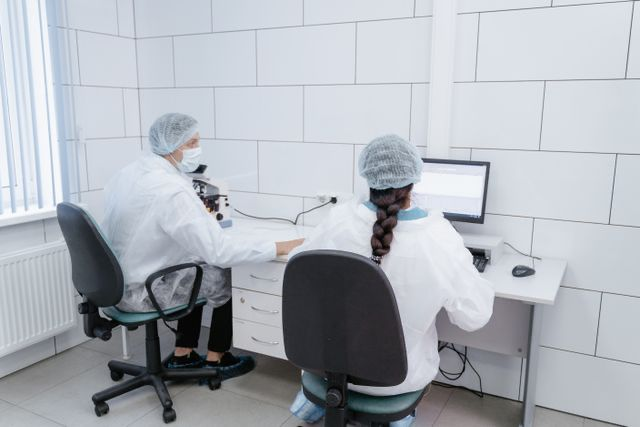
Computers also support laboratory testing. Automated analyzers process large numbers of blood, tissue, and diagnostic samples with remarkable efficiency and consistency. Results are uploaded directly into patient records, reducing the risk of transcription errors and allowing healthcare providers to review important findings quickly. When abnormal values appear, automated notifications can bring them to a clinician’s attention sooner.
Communication Between Healthcare Providers
Healthcare often involves collaboration among multiple professionals. Computers have dramatically improved communication between physicians, specialists, nurses, pharmacists, and other members of the care team.
In the past, sharing records often involved mailed documents, faxed reports, or lengthy phone calls. Today, secure electronic communication allows providers to exchange information almost instantly. Test results, treatment recommendations, referral notes, and care plans can be shared efficiently, helping patients receive more coordinated care.
Telemedicine has expanded communication capabilities even further. Patients can connect with healthcare providers remotely, reducing barriers related to distance, transportation, or mobility challenges. A patient living in a rural area can often consult with a specialist located many miles away without needing to travel.
Healthcare professionals also benefit from improved access to medical knowledge. Physicians can review clinical guidelines, consult colleagues, access research studies, and evaluate treatment recommendations within minutes. This rapid access to information helps support evidence-based decision-making and continuous learning.
Data Analysis and Medical Research
Computers have transformed medical research by enabling scientists and healthcare organizations to analyze enormous amounts of information. Researchers can examine data from thousands or even millions of patients to identify disease patterns, evaluate treatment effectiveness, and improve healthcare strategies.
This analytical capability has accelerated progress in many areas of medicine. Researchers can study risk factors, compare outcomes, and uncover trends that would be nearly impossible to identify manually. These insights contribute to improved prevention strategies, earlier diagnoses, and more effective treatments.
Computing power also supports pharmaceutical development. Researchers use advanced modeling and simulation tools to evaluate potential medications and better understand how drugs may interact with the human body. These processes can help streamline portions of the research and development cycle.
Public health organizations benefit as well. By analyzing information from healthcare systems, laboratories, and communities, officials can identify emerging health concerns and monitor disease patterns more effectively. Early detection allows healthcare leaders to respond more quickly and allocate resources where they are needed most.
When healthcare administrators need to evaluate whether patient care aligns with clinical guidelines and resource management requirements, reliable utilization management software helps support faster and more consistent decision-making while promoting evidence-based care.
Patient Engagement and Treatment Adherence
Computers have also changed how patients interact with their healthcare providers. Secure patient portals allow individuals to review test results, request prescription refills, schedule appointments, and communicate with healthcare teams online.
This accessibility encourages greater patient involvement. Instead of waiting for a phone call or mailed report, patients can often access important information directly and participate more actively in their care.
Technology can also support treatment adherence. Automated reminders can encourage patients to take medications, attend appointments, or complete recommended screenings. These seemingly small interventions can have a meaningful impact on long-term health outcomes.
Health applications and monitoring tools provide another layer of engagement. Patients managing chronic conditions can track symptoms, activity levels, blood pressure, blood glucose measurements, or other health indicators over time. This information can help both patients and healthcare providers identify trends and make more informed treatment decisions.
Conclusion
Computers did not simply enter medicine. They transformed it. From electronic health records and diagnostic imaging to provider communication, medical research, and patient engagement, technology now serves as a foundation for modern healthcare delivery.
These systems help improve efficiency, strengthen patient safety, support collaboration, and provide access to information that guides critical medical decisions. As healthcare technology continues to evolve, computers will play an even larger role in helping physicians deliver high-quality care. The partnership between doctors and technology is no longer optional. It is an essential part of how healthcare operates today and how it will continue to advance in the future.